The body's most complex ecosystems accessible through design
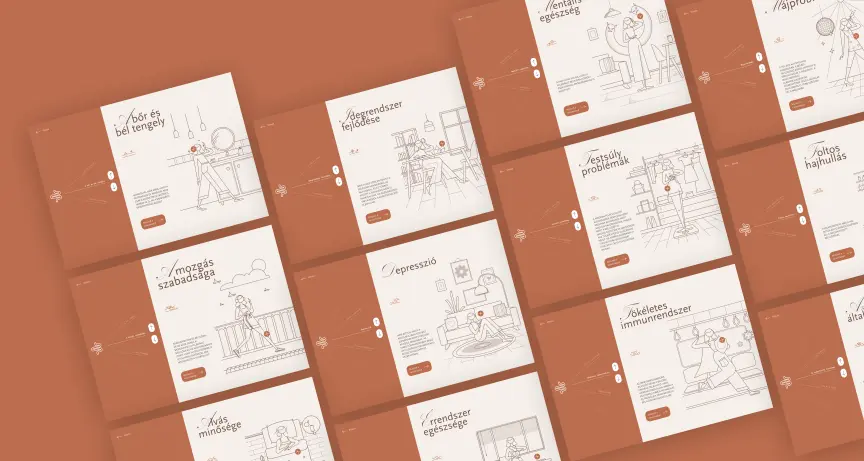
The microbiome is one of the most talked-about topics in modern health science.
We hear about gut health, probiotics, bacteria, and the importance of microbial balance almost every day. Yet for most people, the microbiome remains surprisingly difficult to picture. What does it actually look like? Where does it live? How does it affect us? And perhaps most importantly, how do you explain something so incredibly complex without oversimplifying the science? That's the challenge we had the opportunity to tackle together with GAL SynergyTech Zrt.
For several years, we've had the pleasure of collaborating with GAL SynergyTech, a Hungarian-owned company dedicated to evidence-based health solutions. Their scientific precision and commitment to quality have always made them an inspiring partner, and the microbiome project quickly became one of our favorites.
From the very beginning, we knew this couldn't simply be another infographic. The microbiome isn't a single organ or a single process. It's an entire ecosystem consisting of trillions of microorganisms living in and on the human body. Explaining that visually requires much more than attractive illustrations—it requires structure, accuracy, and careful storytelling.
The visual concept was developed by our senior graphic designer, Fatime Kovács, through close collaboration with the GAL team and extensive professional consultation. Every illustration was created with one goal in mind:
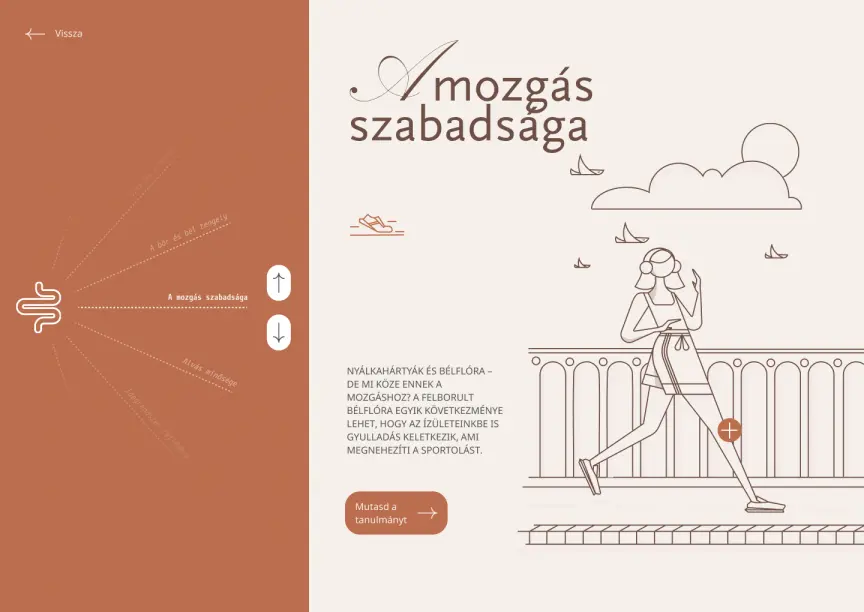
Make scientific information easier to understand without compromising its credibility.
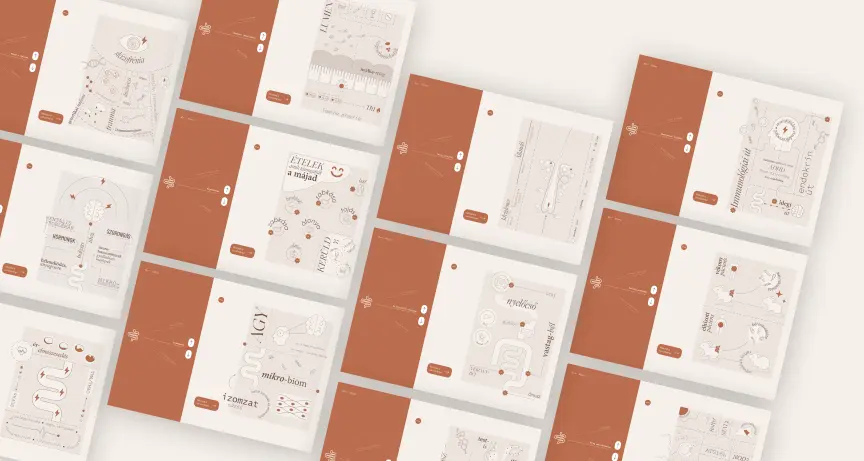
Instead of overwhelming the audience with technical diagrams or dense scientific language, we created a visual system that guides readers through the topic step by step. The illustrations, icons, and graphic elements work together as an educational toolkit, helping transform complex scientific concepts into an engaging learning experience.
Recognition Beyond the Screen
Projects like this remind us why we enjoy working in health communication. Design isn't decoration. It's another layer of communication. When scientific knowledge becomes more approachable, more people engage with it, remember it, and benefit from it.
That's why we were especially proud to see the project selected as a finalist at the Kreatív Design Award in the Pro category – Digital Design. The recognition celebrates not only the visual execution but also the collaborative effort behind translating complex health knowledge into accessible communication.